
Top Criteria for Sourcing Custom EVA Boat Pads: How to Find High-Quality Wholesale Suppliers in China
China high-quality EVA Boat Pads Supplier
Key Takeaway: Sourcing durable marine flooring requires evaluating closed-cell foam density, CNC precision, UV stability, and strong acrylic adhesives. Partnering with a reliable China high-quality EVA Boat Pads Supplier ensures exact pre-cut deck fits, reducing refit labor and replacement costs for global marine businesses.
Understanding the Demands of Modern Marine Decking
Marine environments impose severe operational conditions on boat decking materials. Boat owners, yacht refit managers, marine accessory distributors, and original equipment manufacturers (OEMs) regularly manage challenges related to surface degradation, slippery decks, and labor-intensive installation processes. Traditional decking options like natural teak wood, molded fiberglass, or low-grade vinyl foams frequently present maintenance burdens. Teak requires continuous sanding, oiling, and sealing to prevent rot, while bare gelcoat becomes extremely slippery when wet and reflects uncomfortable solar heat onto passengers.
Furthermore, lower-density foam alternatives often absorb water, sustain UV discoloration, crack along stress points, and suffer from premature adhesive peeling when subjected to relentless saltwater exposure, tropical sun, and heavy foot traffic. For commercial buyers and marine refurbishers, selecting the correct decking product directly impacts passenger safety, boat maintenance schedules, and long-term operating overhead.
Marine-grade ethylene-vinyl acetate (EVA) non-slip pads have established themselves as a modern industry standard, providing superior shock absorption, thermal insulation, noise dampening, and reliable surface traction. However, the quality of EVA foam pads varies significantly across global supply chains. Sourcing custom-fitted mats that preserve structural resilience, color retention, and strong substrate adhesion over years of sea use requires a thorough understanding of raw material formulations, precision manufacturing methods, and supplier quality standards.
Key Technical Standards for Sourcing Premium Marine EVA Flooring
When vetting potential manufacturing partners, procurement teams must look beyond initial aesthetic appearance and systematically analyze the physical properties and chemical formulations of the material. Premium marine EVA flooring performance depends on several critical technical factors:
1. Closed-Cell Foam Structure and Density Ratio
The structural foundation of a high-performance marine pad is its cellular construction. Low-cost or general-purpose EVA foams often utilize open-cell or low-density structures that absorb water, fuel, and grease over time. Water penetration leads to internal rot, unpleasant mildew odors, added vessel weight, and fast material breakdown. In contrast, premium marine EVA relies on a dense, micro-closed-cell formulation. This impenetrable cellular matrix blocks moisture absorption completely, ensures natural buoyancy, and provides resilient cushioning under heavy foot traffic or pounding waves. A standard thickness of 6mm offers an optimal balance between structural stability and comfortable cushioning underfoot, while customized thickness options cater to specialized commercial requirements.
2. Multi-Year UV Resistance and Color Fastness
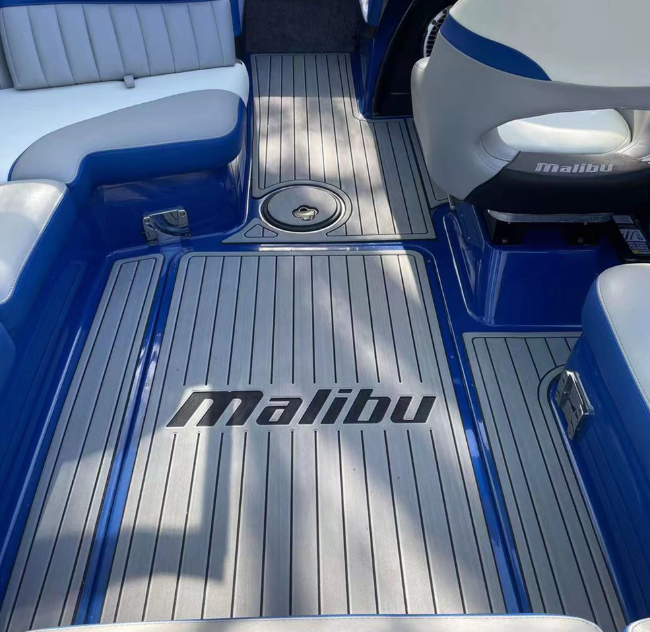
Direct solar radiation and high temperatures cause uninhibited foam materials to shrink, chalk, turn brittle, and suffer severe color fading. A rigorous manufacturing process blends specialized ultraviolet light stabilizers and heat-resistant antioxidants directly into the raw EVA polymer during compound formulation. This chemical treatment enables the material to endure intense solar radiation without fading or losing its structural elasticity, preserving vibrant marine color combinations—such as classic teak-and-black, cool gray-and-blue, or custom boat builder color schemes—season after season.
3. High-Bond Acrylic Adhesive Integration
Adhesive bond failure is one of the most common issues in aftermarket marine pad installation. Lifting edges create severe tripping hazards and collect debris beneath the deck mat. High-grade custom EVA pads rely on heavy-duty, pressure-sensitive acrylic adhesive backings engineered specifically for fiberglass, gelcoat, painted metal, and wood substrates. When installed following proper surface cleaning protocols, these high-shear marine adhesives resist humidity, thermal expansion, high pressure washing, and shear stress generated during high-speed vessel operation.
The Value of Precision Digital Scanning and CNC Fabrication
Achieving an exact, factory-quality fit across complex boat decks requires modern digital design and manufacturing workflows. Hand-cutting flat foam sheets on-site increases labor hours, produces jagged edges, causes material waste, and often results in unsightly gaps around hatch latches, seat bases, and deck hardware.
Professional marine customization relies on 3D laser digitization and multi-axis CNC router technology. The fabrication process follows a streamlined digital workflow:
Digital Deck Mapping: The boat's cockpit, gunwales, bow, and swim platform are scanned using precision 3D laser tools or converted from physical tracing templates into clean CAD vector files. Specific boat models, such as the 2012–2016 Malibu 22 MXZ, feature detailed deck profiles with multiple hatches, storage lockers, and contoured corners that require exact edge tracking to ensure complete gap-free coverage.
Computer-Aided Design (CAD) Optimization: CAD engineers refine the scanned layout, incorporating edge bevels, drain channels, hinge clearances, and custom patterns such as faux teak grooves, diamond traction, or laser-engraved vessel branding.
Automated CNC Precision Routing: High-speed CNC routers cut, contour, and engrave the multi-layer co-extruded EVA sheets. The process produces crisp, uniform lines and clean outer bevels that enhance water drainage and give the vessel a refined, custom appearance.
For marine business owners, importing pre-cut, ready-to-apply EVA mats eliminates manual floor cutting, significantly reduces shop labor hours, and delivers consistent quality across multi-unit fleet refurbishments.
Evaluating Overseas Manufacturing and Customization Capabilities
Navigating global supply chains requires assessing a supplier's production scale, technical capabilities, and service flexibility. Marine retailers, distributors, and refit yards need a production partner capable of handling both low-volume custom orders and full-container wholesale shipments efficiently.
When auditing a potential partner, procurement specialists should evaluate the following core competencies:
Production Capacity and Infrastructure: Facilities equipped with automated CNC routing tables, lamination equipment, and internal quality testing labs maintain stable manufacturing timelines and reliable batch-to-batch consistency.
Engineering and Technical Service: A qualified internal engineering team capable of translating customer CAD files, paper templates, or 3D scans into accurate CNC cut files reduces product development lead times and prevents expensive dimension errors.
Flexible Sourcing Options: The ability to offer small trial orders alongside volume wholesale production enables marine dealers to introduce new color lines or support custom customer requests without carrying excessive safety stock.
Comprehensive Customization: Dedicated support for specialized color matching, custom dual-tone sheet lamination, laser logo branding, and varied surface textures allows marine brands to create distinct, high-margin product offerings.
Partnering with an established China Best EVA Boat Pads factory ensures direct access to material expertise, advanced CNC processing technology, and factory-direct pricing that supports healthy profit margins for distributors.
Operational Realities: Practical Scenarios on the Water
To understand the real-world value of specialized marine EVA flooring, consider how these mats perform in demanding real-life boating situations:
Navigating Choppy Waters and High-Speed Cruising: During sudden maneuvers or rough sea conditions, passengers and crew rely on dependable underfoot traction. Wet fiberglass or smooth aluminum decks become extremely hazardous, increasing slip-and-fall risks. A high-density, brushed or diamond-patterned EVA surface provides dependable anti-slip grip even when flooded with water, helping passengers maintain stability while moving around the cockpit or helm station.
Watersports Hubs and Swim Platform Activity: On towboats and wakeboarding craft like the Malibu 22 MXZ series, the stern swim platform is the primary zone for gear setup, water entry, and boarding. Boarders, swimmers, and children constantly step onto the platform with dripping wet gear, heavy wakeboards, and bare feet. Standard bare gelcoat surfaces can easily chip under board impacts or become painfully hot under summer sun exposure. A 6mm high-density EVA cushion absorbs hard shocks from dropped gear, protects gelcoat surfaces against scratches, and provides a comfortable, heat-insulating cushion for bare feet.
Low-Maintenance Marine Care and Cleaning: Marine equipment must withstand continuous exposure to dirt, fish blood, sunscreen oils, and beverage spills without requiring tedious cleaning routines. Closed-cell EVA foam prevents liquids from soaking into the material core. Routine cleanup requires minimal effort—just a gentle scrubbing with mild boat soap and a quick freshwater rinse restores the deck surface to a clean condition.
Local Wholesale & Sourcing FAQ
Q1: How can a commercial buyer ensure a custom EVA boat pad fits a specific yacht model precisely without gaps?
To achieve a seam-free fit, professional manufacturers utilize precision 3D digital laser scans or CAD vector line files created from physical deck templates. For established classic vessel profiles—such as the 2012–2016 Malibu 22 MXZ—pre-digitized pattern libraries ensure that every hatch cutout, corner radius, and edge bevel aligns with original factory hardware. Working alongside a qualified Top China Best EVA Boat Pads Manufacturer provides buyers with complete access to technical CAD support, template verification, and accurate CNC machining prior to mass production.
Q2: What is the recommended foam density and thickness for commercial marine applications?
For general marine decking, cockpits, and swim platforms, a standard dual-layer thickness of 6mm (3mm top layer co-extruded with a 3mm base layer) is widely recommended. This configuration delivers an optimal combination of cushioning, tensile strength, and deep CNC routing contrast. High-impact commercial vessels or heavy-duty fishing decks can opt for customized 8mm or 10mm thickness specifications. Selecting a dense, closed-cell formulation ensures the pad resists compression set, maintains shock absorption, and blocks water absorption over years of continuous outdoor marine service.
Q3: What are the primary advantages of partnering directly with a specialized China manufacturer for wholesale EVA pads?
Direct collaboration with an experienced manufacturer offers commercial importers significant strategic advantages, including direct factory pricing, access to custom OEM/ODM production lines, and flexible batch manufacturing. Working directly with a dedicated China Best EVA Boat Pads factory allows buyers to maintain direct oversight over raw material formulations, custom color blending, CAD digitizing, and adhesive application, ensuring high product standards, reliable order fulfillment, and competitive pricing for marine distributors and refit yards.
Conclusion
Selecting high-grade marine EVA flooring requires evaluating foam cellular structure, CNC cutting precision, UV resistance, and high-performance adhesive systems. By prioritizing these critical criteria, marine procurement teams, refit specialists, and accessories distributors can deliver durable, aesthetic, and low-maintenance decking solutions that perform reliably in demanding marine environments.
For custom deck flooring solutions, bulk wholesale inquiries, and direct engineering support, visit Huizhou HZ Shark Sports Technology Co., Ltd..
Huizhou HZ Shark Sports Technology Co., Ltd.
Huizhou HZ Shark Sports Technology Co., Ltd.
+86 15360952149
eriee@hzsharks.com
Legal Disclaimer:
EIN Presswire provides this news content "as is" without warranty of any kind. We do not accept any responsibility or liability for the accuracy, content, images, videos, licenses, completeness, legality, or reliability of the information contained in this article. If you have any complaints or copyright issues related to this article, kindly contact the author above.
